Dogs Show Toddler-Like Helping Behaviors: A Study
Why Do Dogs Help While Cats Watch?
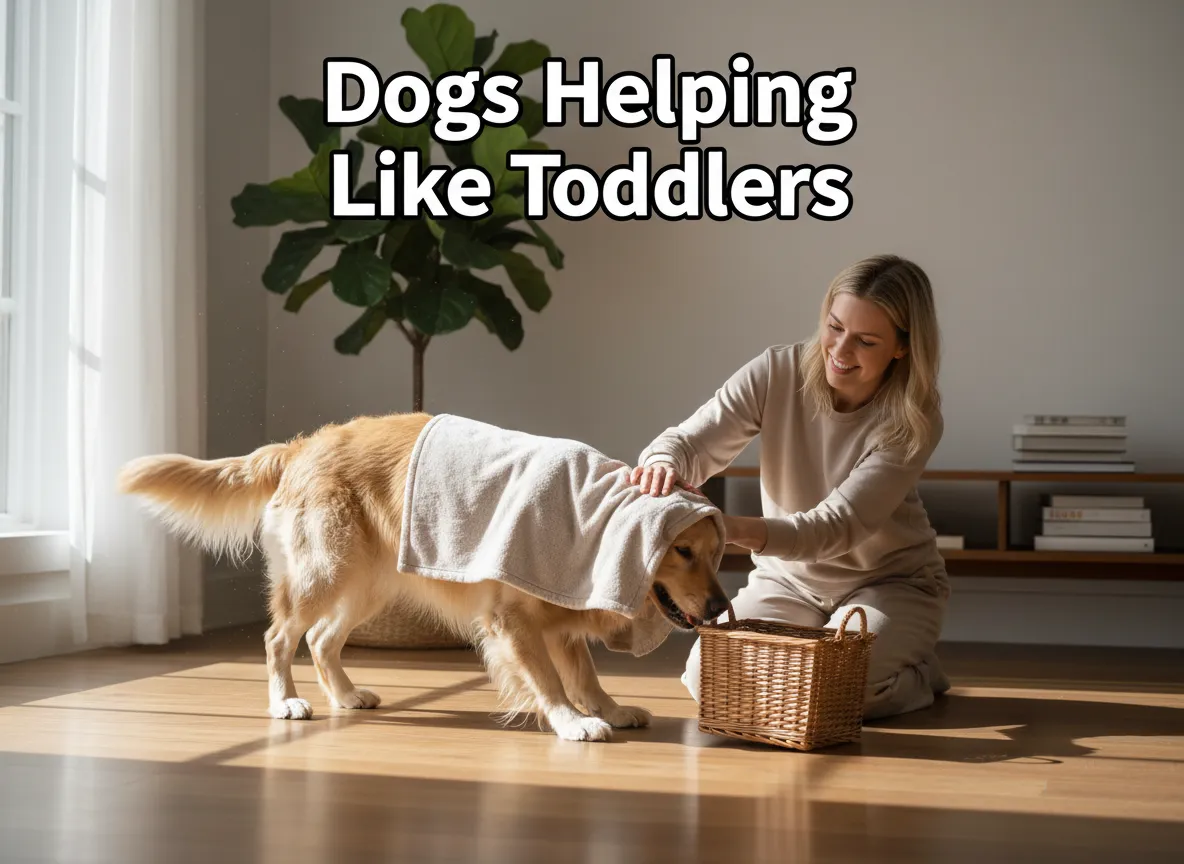
Imagine you’re frantically searching for your keys before heading out, and your dog seems eager to join the hunt, wagging and sniffing around. Meanwhile, your cat is perched on the couch, watching with mild interest. Why do dogs seem to be more 'helpful' in these moments? New research offers some insights.
The Research
A recent study conducted by Eötvös Loránd University in Hungary, along with the HUN-REN–ELTE Comparative Ethology Research Group, explored this intriguing behavior. Published in the journal Animal Behaviour, the study examined how untrained dogs, cats, and toddlers aged 16 to 24 months reacted when a familiar person searched for a hidden object. The goal was to observe if these species naturally engage in prosocial behavior—actions that benefit others—without expecting a reward.
The researchers set up a simple experiment: a caregiver looked for an object hidden in plain sight of a child, dog, or cat. Importantly, the caregiver did not ask for help. They observed whether the subject would spontaneously indicate the object's location or retrieve it.
Melitta Csepregi, the study's first author, noted that children were already known to help others at this age, and their behavior confirmed the method's effectiveness for measuring prosocial actions. Interestingly, over 75% of dogs and children either indicated or retrieved the object, showing a strong inclination to assist, despite the lack of training or rewards.
Cats, however, were less likely to help unless the hidden item was something they personally desired, like a favorite treat or toy. This led senior author Márta Gácsi to suggest that the ability to help spontaneously might be rooted in evolutionary history rather than mere domestication.
What This Means for Dog Owners
For dog owners, this research highlights the inherent social nature of dogs, shaped by a long history of interacting with humans. Dogs have evolved from highly social ancestors and have been honed by thousands of years of living alongside people. This contrasts with cats, whose ancestors were solitary and who 'domesticated themselves' by living near human settlements.
Understanding this can enrich the way we bond with our dogs. Knowing that your dog is naturally inclined to help can influence how you train and engage with them. You might find our Daily Bonding Regimen helpful in strengthening this bond.
Practical Takeaways
- Encourage Prosocial Behavior: Engage with your dog in activities that involve problem-solving and cooperation.
- Training and Socialization: Use positive reinforcement to foster helpful behaviors. Our Training Guide can offer tips.
- Understand Your Pet: Recognize that dogs and cats have different social needs and histories. Explore more with our Dog Behavior Guide.
Comparative Helping Behavior in Dogs, Cats, and Toddlers
A Note on the Evidence
While the study provides fascinating insights, it’s important to note the limitations. The sample size was relatively small, and further research is needed to fully understand the nuances of these behaviors. Additionally, individual differences among pets can vary widely.
Tips for Encouraging Prosocial Behavior in Dogs
Engage in cooperative games.
Use positive reinforcement during training.
Encourage problem-solving activities.
Closing
Engage with us on our blog to share your experiences or learn more about fostering a deeper connection with your furry friends. Understanding these behaviors not only enhances how we live with our pets but also enriches the mutual joy we share.
For more detailed findings, you can view the original study here.


You might also like
Are Humans Closer to Cats or Dogs? An Evolutionary Perspective
May 14, 2026
Explore the evolutionary ties between humans, cats, and dogs. Find out why we're equally related to both.

How Your Samoyed's Howls Might Be More Musical Than You Think
Apr 2, 2026
Discover why some Samoyeds adjust their howls to music, revealing possible ties to their wolf ancestors.

What Dogs and Meerkats Teach Us About Monogamy
Feb 6, 2026
Discover how new research from Cambridge compares human monogamy to that in other mammals like meerkats and beavers.
Comments
No comments yet. Be the first to comment!
Anbefalt Hundeopplæring


Vi kan motta en provisjon hvis du kjøper gjennom disse lenkene (uten ekstra kostnad for deg).