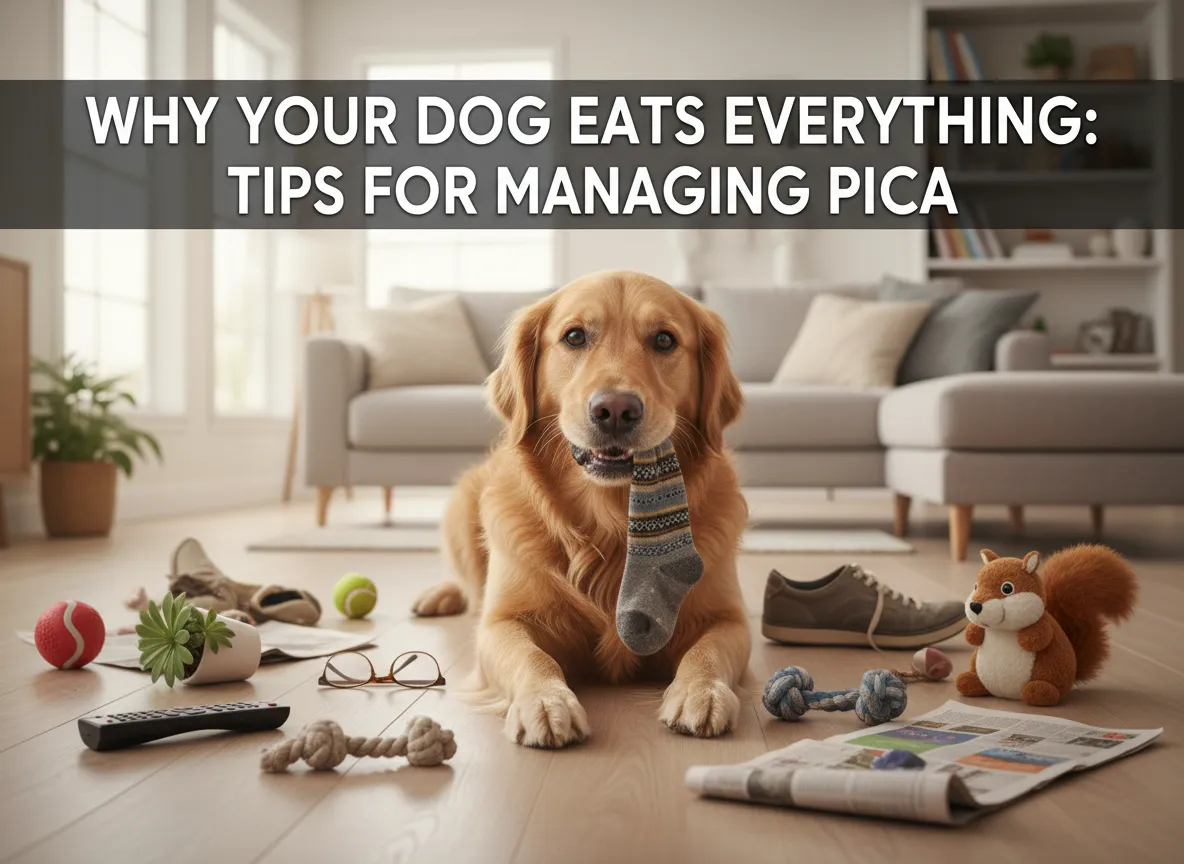
Why Your Dog Eats Everything: Tips for Managing Pica
Introduction
It's a common frustration for many dog owners: despite rigorous training and constant supervision, your dog seems to have an insatiable appetite for everything but their food bowl. From socks to rocks, this behavior isn't just perplexing—it's dangerous. Known as pica, this condition can lead to serious health issues if not properly managed.
In this article, we'll explore why dogs might engage in this risky behavior and provide you with actionable strategies to help curb it. Whether it's a behavioral issue or something more, understanding the root cause is the first step to a safer environment for your furry friend.
Understanding Pica in Dogs
Pica is the term used to describe the craving and consumption of non-food items. This behavior is not unique to any specific breed or size of dog—it can affect any canine. The reasons behind pica can vary greatly, from nutritional deficiencies to boredom, anxiety, or even medical issues.
-
Nutritional Deficiencies: Sometimes, dogs eat non-food items to compensate for a lack of nutrients in their diet. This can often be addressed by ensuring your dog's diet is balanced and complete. Consider using our Nutrition Planner to optimize your dog's meals.
-
Boredom or Anxiety: Dogs need both physical and mental stimulation. A lack of exercise or mental challenges can lead to destructive behaviors like pica. Increasing playtime or introducing interactive toys can help redirect their energy.
-
Medical Issues: In some cases, pica may be linked to gastrointestinal issues, diabetes, or other medical conditions. Consulting with a veterinarian can help rule out or treat these underlying problems.
Actionable Strategies to Curb Pica
Dealing with pica requires a multifaceted approach. Here are some strategies to consider:
Improve Environmental Supervision
-
Dog-Proof Your Home: Just like child-proofing, make sure potential choking hazards are out of reach. Use baby gates to limit access to certain areas.
-
Regular Housekeeping: Keep floors clean and free of small objects or debris that your dog might find appealing.
Enhance Behavioral Training
-
Reinforce Commands: Commands like 'leave it' or 'drop it' are essential. Regular practice, even in distraction-free environments, can improve your dog's responsiveness.
-
Positive Reinforcement: Reward your dog for ignoring or releasing non-food items. This encourages them to repeat the behavior.
-
Engage a Professional: If your efforts aren't working, consider hiring a certified dog behaviorist. Our Dog Behavior Guide can help you understand more about this issue.
Provide Adequate Physical and Mental Stimulation
-
Regular Exercise: Ensure your dog gets enough physical activity daily. This can include walks, runs, or play sessions.
-
Interactive Toys: Use toys that challenge your dog's mind, such as puzzle feeders or treat-dispensing toys.
-
Social Interaction: Arrange playdates with other dogs to provide both social and physical activity.
Practical Tips
- Monitor Closely: Always supervise your dog during playtime and walks.
- Vet Check-Ups: Regularly visit your vet to ensure there are no underlying health issues.
- Dietary Adjustments: Use the Toxic Foods Checker to ensure your dog's diet is safe and complete.
- Keep a Journal: Track behaviors and potential triggers to identify patterns or recurring problems.
When to See a Vet
If your dog consistently consumes non-food items or exhibits signs of illness (vomiting, diarrhea, lethargy), it's time to consult with a veterinarian. These could be signs of an underlying condition that needs medical attention.
Conclusion
Managing a dog with pica can be challenging, but with patience and the right approach, you can reduce the risks. By understanding the possible causes and implementing targeted strategies, you can help your dog overcome their unusual cravings. Stay persistent and connect with professionals when needed to ensure the health and happiness of your furry companion.
For further reading and tips, visit our blog for more articles on dog behavior and care.
You might also like

Why Dogs Dash Away and How You Can Prevent It
Jun 3, 2026
Discover why even well-loved dogs run away and learn practical tips to prevent such heart-stopping moments.
Understanding Sudden Changes in Dog Behavior
Mar 16, 2026
Explore why your dog might be exhibiting new behaviors suddenly and learn practical steps to address these changes effectively.
Understanding and Managing Your Dog's Air Licking Behavior
Feb 6, 2026
Discover why dogs lick the air and learn practical steps to address this behavior effectively.
Comments
No comments yet. Be the first to comment!
Anbefalt Hundeopplæring


Vi kan motta en provisjon hvis du kjøper gjennom disse lenkene (uten ekstra kostnad for deg).